


 2026-08-10 07:47
 By KESONLY


A Closer Look at Corners and Character
Two diamond styles can share a broad outline while creating different visual impressions.
When you prefer a square or rectangular diamond, the choice may come down to details that are easy to miss at first: the corners, the sides, and the pattern you see within the stone.
Cushion and radiant designs offer a useful comparison. Start with their outlines, then let the actual diamonds show you the rest.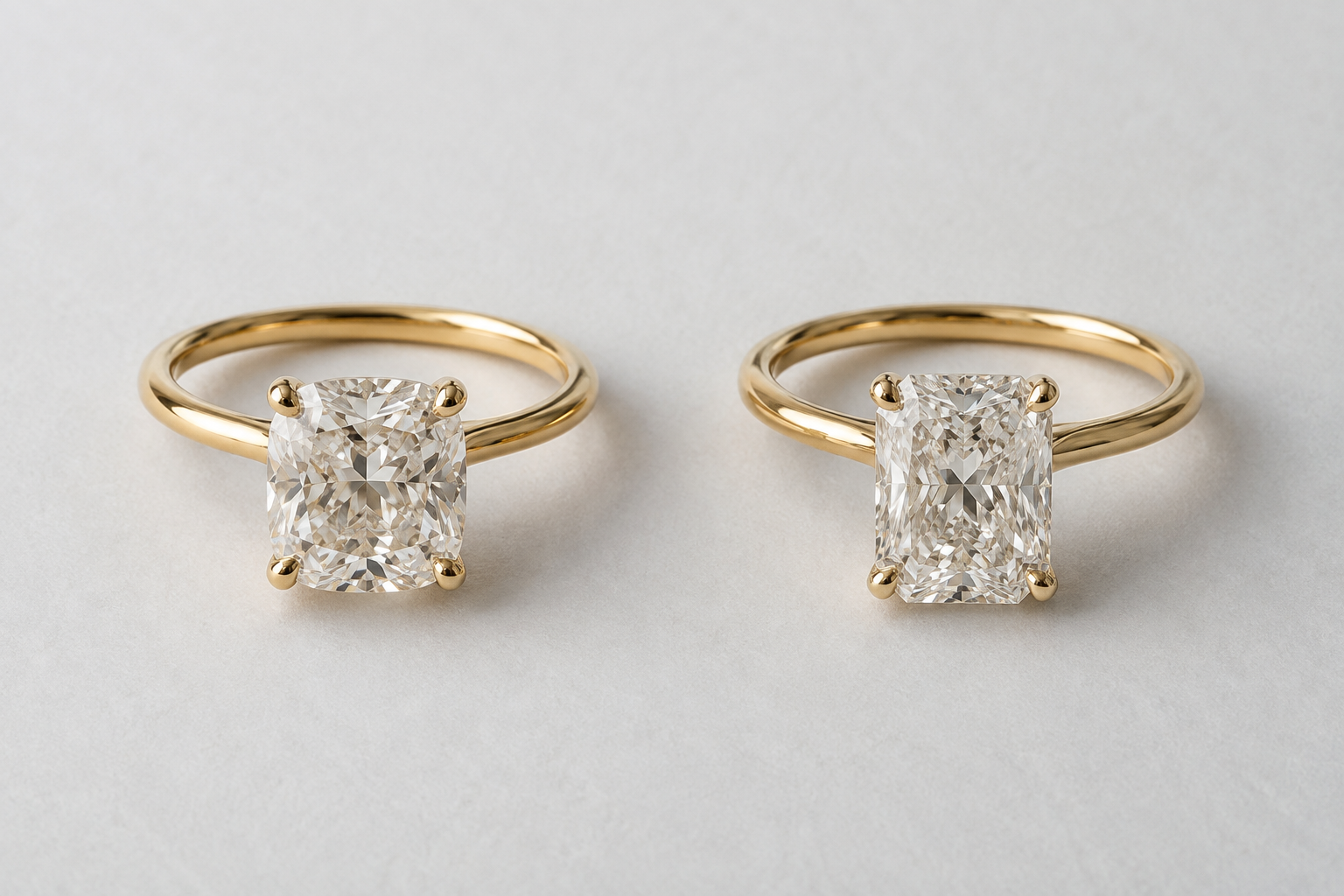
1. Begin at the Edges
Cushion shapes have softened, rounded corners. Radiant cuts typically have a square or rectangular outline with clipped corners and more defined straight sides.
Either can vary in proportion. Comparing an elongated example of one style with a square example of the other may blur what you are responding to.
Try similar proportions first. You can then decide whether your preference is for a particular length, a particular corner treatment, or both.
2. Watch the Light Move
The appearance within a diamond depends on its individual cutting and proportions. Do not assume that every stone with the same shape name will show the same pattern.
Ask for a video of the actual diamond, ideally in more than one lighting condition. Notice which reflections remain appealing as the stone moves.
A highly enlarged image can be helpful for inspection. Also look at the ring at a realistic scale, where the outline and setting become part of the impression.
3. Include the Setting
Compare similar metal colors and band widths when possible. A dramatically different setting can distract from the shape comparison.
Consider the side profile, the center's height, and how the ring might sit with a second band. Ask for measurements rather than estimating from a photograph.
The final decision should include the available grading information and the complete ring's construction. A preferred silhouette is a starting point for careful selection.
| Compare | Cushion | Radiant |
|---|---|---|
| Corners | Rounded, softer outline | Clipped, more angular outline |
| Proportions | May be square or elongated | May be square or rectangular |
| Next step | View the actual stone in motion | View the actual stone in motion |
Choose the corners and proportions you enjoy seeing, then assess the individual stone. A clear comparison makes room for personal taste without asking a shape name to answer every question.
Share your preferred outlines with KESONLY and request the views and details that will help you compare.
Compare Your PreferencesFurther reading: Radiant cut reference · Cushion cut reference.
Original KESONLY editorial. AI-generated conceptual imagery does not represent a specific product.
Continue reading:
Round or Oval? · Emerald-Cut Diamonds · The Asscher-Cut Diamond