


 2026-08-01 05:00
 By KESONLY


Finding Your Diamond's Silhouette
A practical way to compare two familiar shapes without losing sight of personal taste.
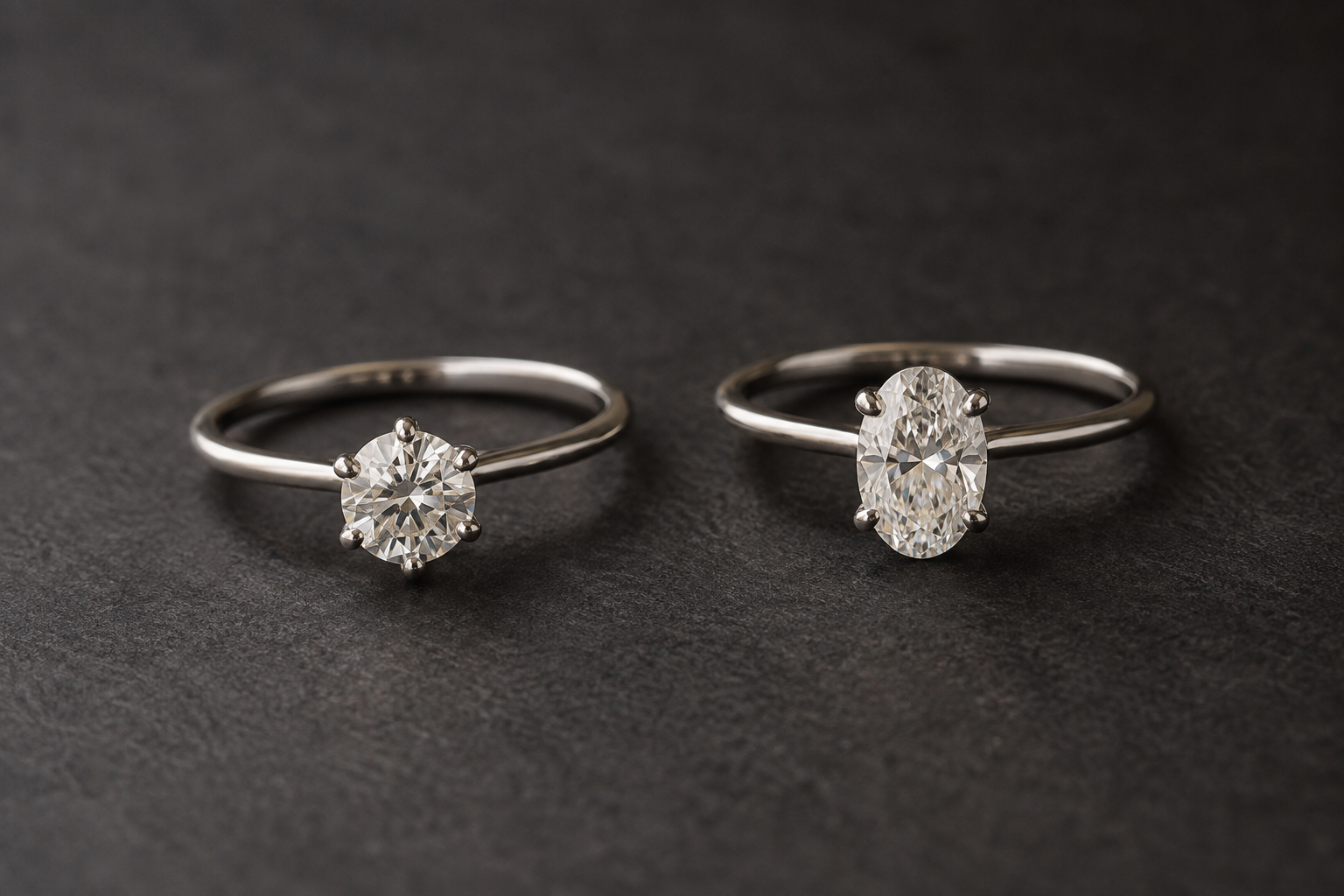
A round diamond and an oval diamond can both look beautiful in a simple ring. Yet they create noticeably different outlines on the hand, and that difference often matters more to the wearer than a list of popular styles.
Start by noticing which shape makes you pause. Then give your preference a little practical attention.
 1. Compare the Outline First
A round shape offers a balanced circular outline. An oval extends that outline in one direction, creating a longer visual line. Shape describes the outline; it should not be confused with the overall quality of the cut.
Compare both shapes at similar presentation scales. A tightly cropped photograph can make either diamond seem more prominent than it will appear on your hand.
2. Look Beyond the Still Image
Ask to see each actual diamond move in ordinary lighting. Some oval diamonds show a darker pattern across the middle often called a bow tie; its appearance should be assessed in the individual stone.
For either shape, notice how the appearance changes as you turn it. An attractive still frame is only one moment in how a diamond will look when worn.
3. Let the Setting Join the Decision
Try to compare similar band widths and metal colors before deciding which silhouette you prefer. A different setting can change the overall impression enough to distract from the shape itself.
Consider the side view and the way the ring sits beside another band. Bring a photograph of jewelry you already own if that helps explain the balance you want.
Finish by checking the actual measurements and the available grading information. Personal preference works best alongside a clear understanding of the piece.
| What to compare | Round | Oval |
|---|---|---|
| Visual outline | Circular and balanced | Elongated and curved |
| Personal preference | Try a centered, compact silhouette | Try a longer line on the finger |
| Useful next step | View the actual stone in motion | View the actual stone in motion, including its center |
A Shape You Will Enjoy Returning To
The right comparison leaves you more certain about your own taste. Choose the outline that feels at home on your hand, with the details of the actual ring clearly understood.
Make the Comparison Personal
Share your preferred shapes with KESONLY and ask for the measurements and views that will help you decide.
Talk Through Your OptionsContinue reading:
Beyond the Round · The Asscher-Cut Diamond · Emerald-Cut Diamonds