


 2026-10-13 09:10
 By KESONLY


Three Corners, a Different Point of View
An angular outline changes the character of a diamond design before the first detail of its setting is noticed.
Most of us can recognize a circle without thinking about where it begins. A triangle asks something different of the eye. Its corners establish direction, and a small change in orientation can make the same outline feel stable, energetic, or unexpected.
In a diamond ring or pendant, that geometry becomes part of the wearing experience. The attraction may begin with the unusual shape, but the most useful questions concern the actual stone, the setting, and the way they work together.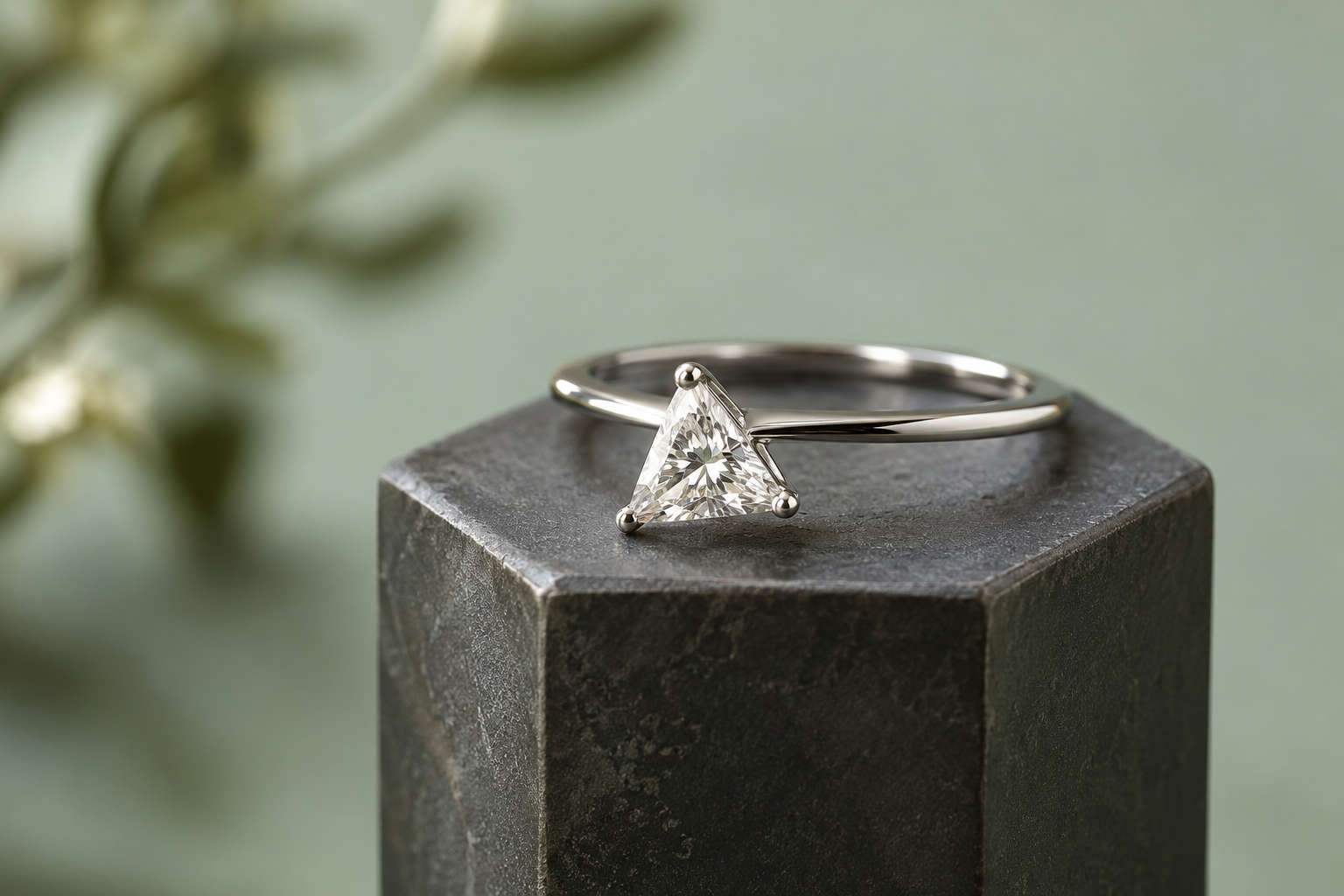
Notice the outline first
Triangular diamond designs do not all have the same proportions or the same curve along their sides. Some outlines look sharply geometric; others feel softer. Look at the actual stone and setting together rather than imagining one standard triangle.
For a pendant, observe where the chain connects and which corner points downward. For a ring, consider how the outline crosses the finger. These choices influence the piece's direction before you start comparing smaller decorative details.
Corners deserve a closer look
A pointed outline brings construction into the conversation. GIA explains that sharp corners and points are more vulnerable to chipping and discusses the role of protective settings. Ask a qualified jeweler how the specific design supports and protects the stone's corners.
This is not something a style name alone can answer. Request a clear side view and a description of the setting. The goal is to understand the actual construction and its intended use, rather than assuming that a photograph tells the whole story.
Compare three views
Start face-up to understand the outline and visible pattern. Then look from the side to see the depth and height of the complete piece. Finally, look at it on the hand or against a familiar neckline to understand its scale.
A dramatic close-up can make a compact stone feel monumental. Dimensions help bring it back into proportion. If you are comparing two options, keep the viewing distance and lighting as similar as possible so the presentation does not become the main difference.
Let geometry carry the expression
A single triangular stone can provide enough visual character for a simple design. Repeating triangles elsewhere in an outfit may create a strong theme; leaving the pendant or ring alone can feel more relaxed.
You do not need an assigned symbolic meaning to enjoy the shape. It may remind you of architecture, a drawing, or a direction you want to take. What matters is that the finished piece feels as compelling in ordinary use as it does in the first striking photograph.
Ask KESONLY about the shape, scale, and construction details of an angular diamond design.
See Diamonds from Another Angle