


 2026-09-21 10:20
 By KESONLY


Turn Inspiration into a Clear Design Brief
You do not need to know every setting name. A few well-chosen observations can make your ideas much easier to understand.
Your inspiration folder may contain a sculptural ring, a piece of architecture, a sleeve in a particular shade, and a photograph that simply feels right. None of those references is wrong. The challenge is explaining what connects them before a conversation becomes a list of unrelated requests.
A useful jewelry brief makes those connections visible. It does not have to contain a drawing or technical terminology. It needs to show what matters to you, what you are unsure about, and which practical limits should shape the discussion.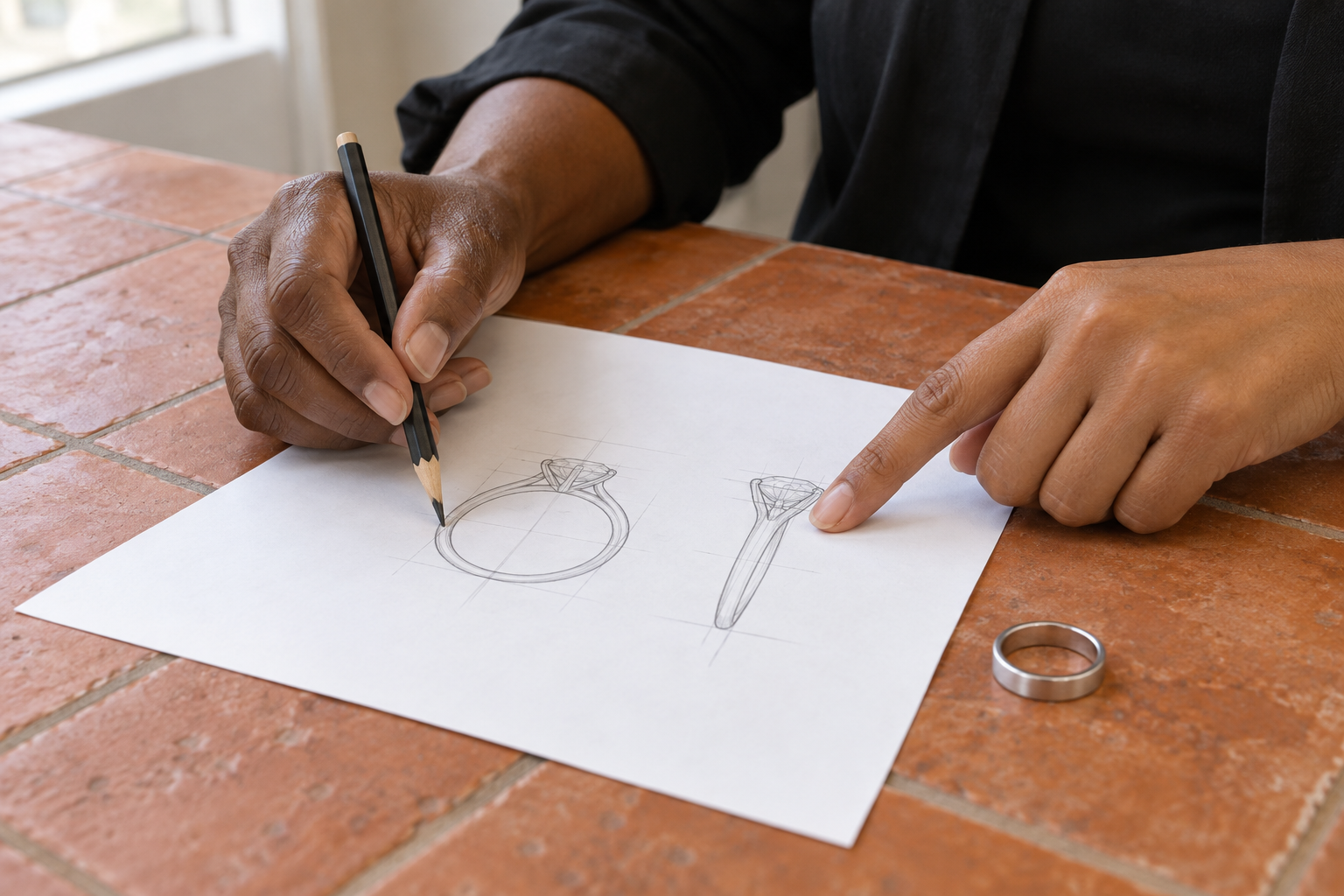
Begin with the reason for the piece
Write one sentence about its place in your life. It might mark a personal achievement, replace something you rarely wear, or become a piece for frequent use. Be specific about the role rather than reaching immediately for adjectives such as timeless or luxurious.
Then name your three most important priorities. A low visual profile, a strong geometric outline, and a warm metal color are easier to discuss than 'something unique.' If priorities conflict, knowing their order helps a jeweler explain the trade-offs.
Annotate your references
Choose a small number of images and explain one detail in each. You may like the thickness of a band but dislike its stones, or love an open side view without wanting the same overall design. Naming those distinctions prevents a reference from being mistaken for a request to copy the entire piece.
Include dislikes where they clarify the idea: no decorative shoulders, no large center motif, no dangling elements. Keep the language about your preferences. A useful brief makes room for an original response and for an honest explanation of what is feasible.
| Include | Make it specific |
|---|---|
| Purpose | What place will this piece have in your life? |
| Priorities | Which three features matter most, in order? |
| References | Which detail do you like in each image? |
| Practical needs | Spending limit, timing, fit questions, and materials to clarify. |
A sample brief you can adapt
The following is an illustrative brief, not a customer story: 'I want a ring to mark finishing a long creative project. I picture a broad, simple gold shape with one small diamond. I prefer rounded edges and a quiet surface. I do not want a high central setting. My first priority is comfort, then the overall outline.'
Add your own intended spending limit, timing, known size information, and questions about materials. Ask the jeweler to confirm measurements and feasibility rather than treating your notes as final technical specifications.
Finish with the questions that prevent confusion
Before proceeding, establish what the proposal includes, which materials or stones are specified, what can still change, and how approvals will be recorded. If you are discussing custom work, ask whether that service is available, which stages are offered, and what terms apply. Availability should be confirmed directly.
A clear brief protects the enjoyable part of the process: discovering what your initial idea could become. Bring a few precise observations, stay open to informed suggestions, and keep the reason for the piece in view. That reason is the most useful reference of all.
Send KESONLY a concise brief and ask about the options currently available for your request.
Start with Your IdeaContinue reading:
Your First Fine Jewelry Piece · The Meaning of an Engraving · Jewelry Beyond Gender