


 2026-09-17 09:45
 By KESONLY


Color Deserves Its Own Conversation
A few useful distinctions make it easier to enjoy colored diamonds without confusing appearance, origin, and grading.
A yellow diamond can feel like a small patch of afternoon sunlight. A softly pink one may seem almost reserved until it meets the skin. Color changes the emotional starting point of a diamond: before you begin comparing details, you may already have a response to its shade.
That response deserves good information beside it. Here are five questions that separate the pleasure of looking from the facts a seller or laboratory needs to establish.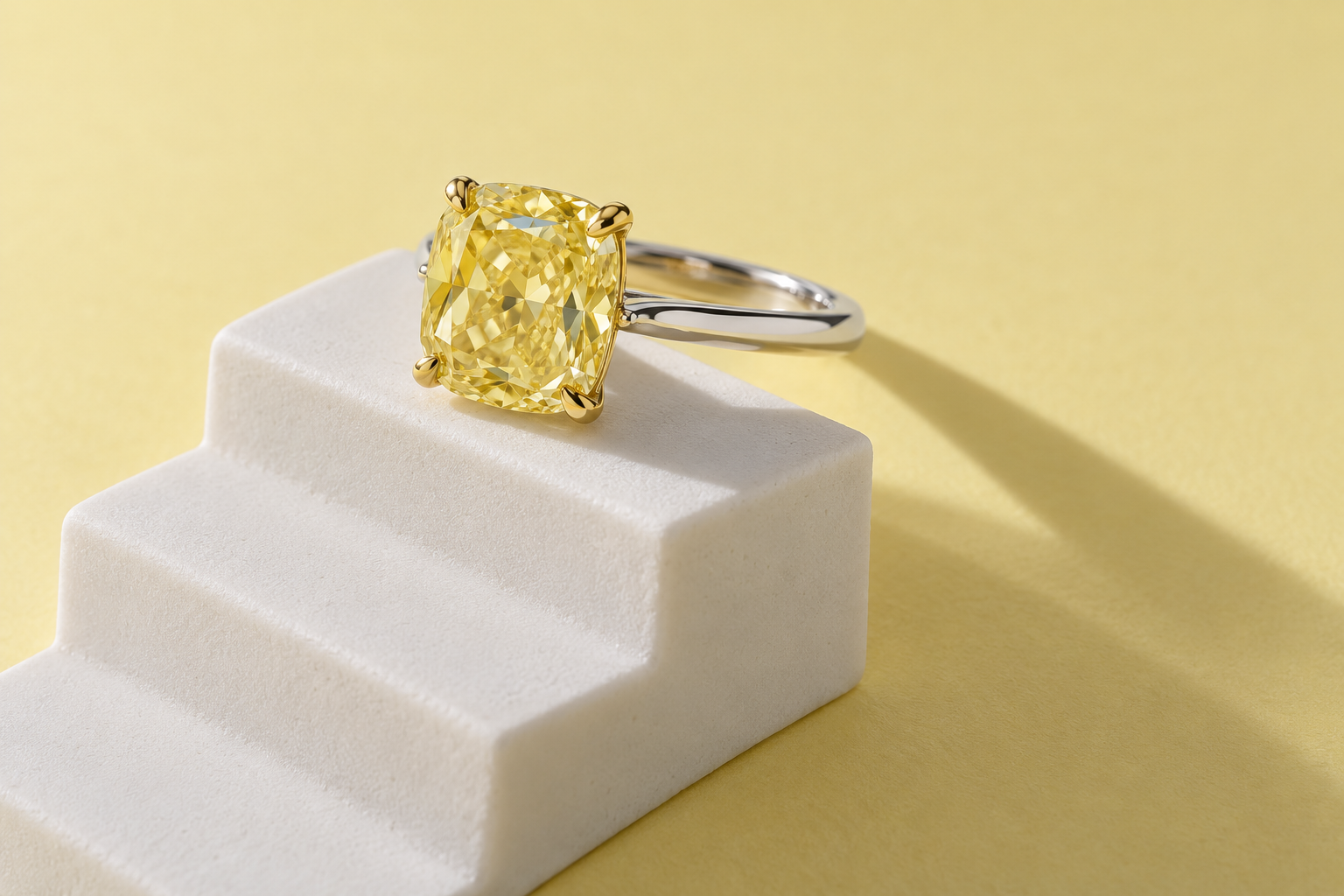
Is fancy color simply the next letter after Z?
No. Fancy-color diamonds are assessed through a different color framework from the familiar D-to-Z range. Yellow diamonds with color beyond that range receive fancy-color descriptions; other hues require their own criteria. It is more useful to read the actual report than to imagine one long alphabet covering every color.
What does the color description tell me?
Hue and the strength and depth of color are central to the description. Terms such as Fancy Light, Fancy Intense, and Fancy Vivid are specialized grading language. They should not be assigned from a screen image or treated as interchangeable marketing adjectives.
For personal preference, use ordinary words first. Does the yellow feel fresh or warmly golden? Does the color remain visible when you step away from concentrated display lighting? Your observations help clarify taste; a laboratory assessment answers a different question.
Are diamond origin and color origin the same?
They are separate questions. Establish whether the diamond is natural or laboratory-grown, then ask whether its color is natural or the result of treatment. A natural diamond may have treated color. Request clear written disclosure and documentation appropriate to the particular stone.
If a report accompanies the jewelry, read its scope carefully. A document focused on color does not necessarily provide every quality assessment you might expect. Ask what it covers and what it does not, rather than relying on the presence of a report alone.
Why does the same stone look different in photographs?
Lighting, camera exposure, surroundings, and the display you use can all influence the impression of a photographed color. Ask for views that include the full piece and a neutral background. If an in-person comparison is possible, include ordinary lighting rather than judging only under spotlights.
The mounting is also part of your experience of the finished jewel. Warm metal near a yellow stone creates a different visual composition from a cool white-metal surround. Enjoy that effect while keeping the documented stone description separate.
What should make the final choice feel right?
You should understand what is being offered and still love looking at it. A distinctive color can become an everyday signature without needing a dramatic story attached. KESONLY encourages a clear conversation first, leaving plenty of room for the personal response that brought you to the piece.
Tell KESONLY which color interests you and what you would like to understand before taking the next step.
Ask a Clearer QuestionContinue reading:
Beyond the White Diamond · Black Diamonds · Diamond Color