


 2026-10-10 08:55
 By KESONLY


A Line That Refuses to Stand Still
Two sweeping arms create a ring whose character comes from movement, overlap, and the space between.
A conventional circle gives the eye a place to settle. A bypass ring sends it on a small journey. One side curves upward, the other passes alongside it, and the design seems to continue even after you have understood its outline.
That impression of movement is the subject here. It can come from polished metal alone, from a stone at one end, or from two elements that nearly meet. The space between them is part of the ring's character.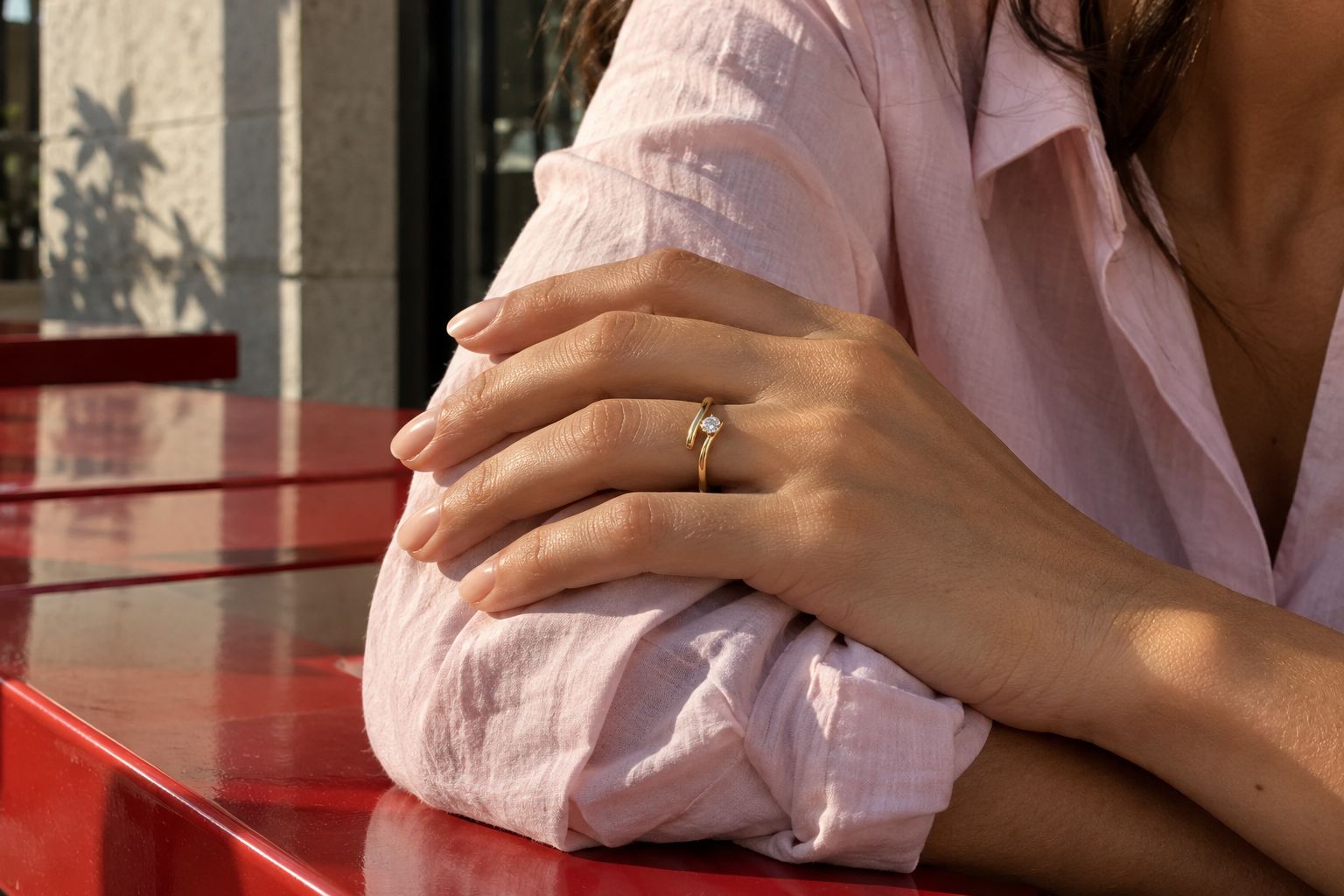
Read the silhouette before the detail
Begin with the view at arm's length. Is the ring a gentle sweep across the finger, a bold diagonal, or a pair of compact curves? The overall line determines its first impression more strongly than a tiny decorative detail.
Then move closer. Follow each arm from the back of the band to its visible end. An appealing design should still make visual sense when you look beyond the front. Different examples use different constructions, so compare the actual ring rather than relying on the style name.
A stone can act like a full stop
A small diamond at one tip brings the eye to a precise point. Two stones may create a conversation across the opening. A completely plain version places more responsibility on the shape and finish of the metal.
Choose the relationship you enjoy. If the curve is what first attracted you, an elaborate stone arrangement may not add anything you need. If the meeting of two elements carries a personal association, the gap and the alignment may matter as much as the individual stones.
Open does not automatically mean adjustable
An opening in the design is not permission to bend the ring to fit. Ask the maker or seller whether the particular construction is intended for adjustment and how sizing should be handled. Repeatedly changing the shape yourself can place stress where the design was not intended to flex.
Try the ring in the correct size and notice how it sits as the hand relaxes. Check whether a raised end catches the neighboring finger or a familiar sleeve. The best assessment includes ordinary movement, not only a carefully posed view.
Give the curve room to speak
A bypass ring can work beautifully on its own because its outline already contains contrast. If you wear neighboring rings, look at the spaces between the shapes and whether they touch in an uncomfortable way.
There is a quiet emotional possibility in the design: two paths remaining distinct while sharing one piece. That is a meaning you may choose to give it, not a fixed historical promise. The curve can also simply be a form you love, which is more than enough.
Discuss the outline, fit, and construction of a ring you are considering with KESONLY.
Explore a More Fluid Shape